
How to Choose the Best Helicopter Flight School for Your Career
If you’re serious about becoming a helicopter pilot, one of the biggest decisions you’ll make happens before you ever start training: choosing where to do it.
There are helicopter flight schools across the country, and on paper, a lot of them can look pretty similar. They have helicopters. They have instructors. They offer the certificates you need.
But flight training is a major investment of your time and money, and the school you choose can have a lasting impact on the kind of pilot you become.
At Higher Ground Helicopters, we talk to prospective students from all kinds of backgrounds. Some have wanted to fly since they were kids. Some are veterans looking at their next career. Some are working adults who have reached the point where they’re ready to turn a long-time interest in aviation into something real.
Wherever you’re starting from, here are some of the things we think you should look at when comparing helicopter flight schools.
1. Look Beyond the Private Pilot License
If your goal is simply to fly recreationally, earning your Private Pilot License may be exactly what you need.
If you want a career flying helicopters, however, think several steps ahead.
Ask a prospective school whether you can continue your training there after earning your private certificate. A professional pilot training path may include:
- Private Pilot License (PPL)
- Instrument Rating (IR)
- Commercial Pilot License (CPL)
- Certified Flight Instructor (CFI)
- Certified Flight Instructor – Instrument (CFII)
Being able to progress through your training at one school means you’re not starting over with a new operation, new instructors and new expectations every time you reach the next stage.
Higher Ground offers the full progression from Private Pilot through CFII, as well as specialized Long Line Training for pilots who want to continue developing advanced skills.
2. Ask How Often You’ll Actually Be Able to Fly
This is an easy question to overlook.
A school may have a great program, but that doesn’t help much if aircraft availability consistently prevents students from getting into the air.
Consistency matters in helicopter training. Skills build on each other, and long gaps between flights can mean spending valuable lesson time getting comfortable again instead of moving forward.
When you’re touring a school, ask about the fleet. Ask how scheduling works. Ask how frequently students typically train.
Don’t feel awkward asking specific questions. You should.
You’re making a significant investment, and aircraft and instructor availability directly affect your training.
3. Understand Part 61 vs. Part 141 Training
You’ll probably encounter the terms Part 61 and Part 141 pretty quickly when researching helicopter pilot schools.
Both can lead to FAA pilot certification, but the structure is different.
Part 61 training can offer greater flexibility, which may be ideal for some students. Part 141 schools operate under an FAA-approved training curriculum and follow a more structured training program.
Higher Ground offers both options.
Our Part 141 program operates in conjunction with Sinclair Community College, allowing qualifying students to pursue their flight training while working toward an Associate’s or Bachelor’s degree.
Depending on your circumstances, one route may make considerably more sense than the other. A good flight school should help you understand the difference rather than simply steer you toward whichever program is easiest for them to sell.
4. Pay Attention to the Instructors
You’ll spend a lot of time with your flight instructors.
Find out who they are.
Ask about their backgrounds and how the school develops its instructors. When you visit, pay attention to how instructors interact with students and with one another.
Flight instruction is more than sitting next to someone while they accumulate the required hours. A good instructor is constantly teaching judgment, awareness and good habits.
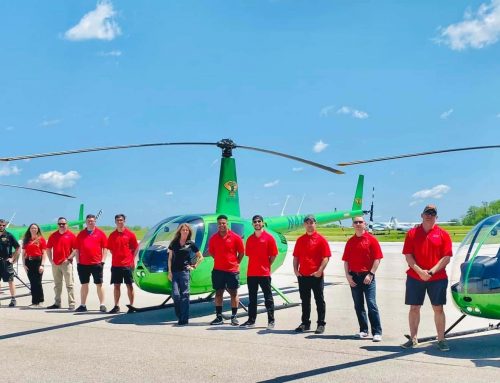
At Higher Ground, nearly 80% of our staff are veterans or graduates of our own program. We like having instructors who understand the training path because many of them have been through it here themselves.
5. Ask What Happens After Commercial Training
This is one of the most important questions for a career student:
What happens when I finish?
Earning your Commercial Pilot License allows you to be compensated as a pilot, but you’re still early in your professional career. Building experience and flight time is the next challenge.
That’s one reason CFI and CFII training can be so valuable.
Flight instruction gives commercial pilots an opportunity to deepen their skills while building real-world professional experience. At Higher Ground, we regularly hire top students as CFIs as instructor positions become available.
We can’t promise anyone a job simply for completing training, and we’d be wary of a school that did.
What we can do is train students with professional flying in mind from the beginning.
6. Consider Whether You Need to Stay Close to Home
We understand why people begin their search with “helicopter flight school near me.”
It’s a logical place to start.
But if you want to fly professionally, we’d encourage you to widen the map before making your final decision.
Students routinely make decisions about colleges, trade schools and specialized career programs based on the quality and fit of the program—not simply which one happens to be closest.
Helicopter training deserves the same consideration.
Compare programs nationally. Look at the aircraft, training structure, instructors, schedule, career pathway, financing options and overall environment.
Then decide where you want to train.
Higher Ground is located at Wright Brothers Airport in Miamisburg, Ohio, between Cincinnati and Dayton. While we’re proud to be an Ohio flight school, our professional training programs aren’t designed only for Ohio students. We welcome future pilots from across the country.
7. If You’re a Veteran, Ask Very Specific Questions
Veterans considering flight training should talk directly with prospective schools about their approved programs and how education benefits may apply.
Higher Ground is veteran-owned and operated, and our Part 141 training program through Sinclair Community College provides an option for eligible veterans to use VA education benefits while pursuing their degree and flight training.
Because everyone’s eligibility and situation can be different, this is an area where we recommend having an actual conversation rather than trying to piece everything together online.
8. Visit Before You Decide
This might be our biggest piece of advice.
A website can tell you what programs a school offers. It can’t tell you what it feels like to train there.
Visit the airport.
See the aircraft. Meet an instructor. Talk about scheduling. Ask about costs. Ask what students struggle with. Ask what successful students do differently. Ask what the path looks like from your first flight through your first professional flying job.
And pay attention to whether you’re getting straightforward answers.
You’re not just buying flight hours. You’re choosing the people who are going to teach you to fly a helicopter.
That’s worth getting right.
Considering Helicopter Flight Schools?
If you’re comparing helicopter flight training programs anywhere in the United States, we’d be happy to show you what training at Higher Ground looks like.
We offer Private Pilot, Instrument, Commercial, CFI and CFII training, along with specialized Long Line Training, from our location at Wright Brothers Airport in Miamisburg, Ohio.
Come visit the school, meet our team and see the helicopters for yourself.
If you’re still wondering whether flying helicopters is really for you, there’s an even better way to find out: schedule a discovery flight and get behind the controls.